Understanding the Key Hind End Muscle Groups and Why Targeted Massage is Essential for Equine Athletes
Introduction
When it comes to performance horses, the hind end is truly the engine — the source of raw power, speed, collection, and agility. Whether your horse is running barrels, navigating technical turns, or building strength and balance, their ability to perform and remain sound relies heavily on the health and function of their hind-end muscle groups.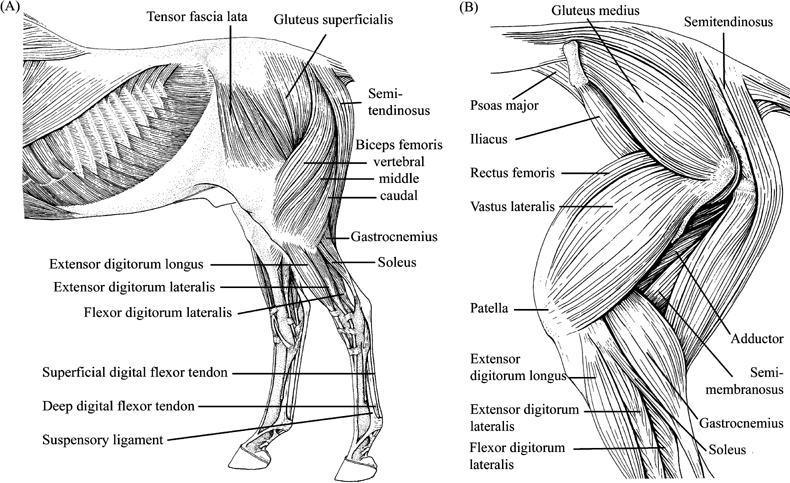
As an equine sports massage therapist, I work extensively with this powerhouse region. Let’s take a look at the five most important hind-end muscles in your horse, discover what each one does, and see how a good sports massage can help your horse feel and move their very best.
1. Gluteal Muscles: ,The Powerhouse Behind Every Stride
The gluteal muscle group — including the superficial, middle, and deep gluteals — handles the majority of a horse’s forward propulsion. These muscles are crucial for pushing off the ground, climbing, accelerating, and lifting through the hindquarters.
· Deep tension in the glutes limits stride reach
· Tight glutes reduce the ability to push and lift
· Compensation often appears as short-striding, lead issues, or reluctance to engage
How massage helps: By releasing adhesions and relaxing these large muscles, massage improves power transfer, range of motion, and overall balance — all essential for speed and maneuverability.
2. Hamstrings: The Drivers of Forward Motion
 The hamstring group — composed of the biceps femoris, semitendinosus, and semimembranosus — extends the hip, stifle, and hock. These muscles drive the horse forward, help gather for stops, and support powerful takeoffs.
· Crucial for pushing off the ground
· Support quick transitions and explosive movement
· Affect hip mobility and the ability to “sit” on the hind end
How massage helps: Sports massage softens overly tight fibers, helps prevent pelvic imbalance, and reduces strain that could otherwise lead to stifle or hock compensation.
3. Quadriceps: The Stabilizers of the Stifle
The quadriceps femoris group is essential for stifle extension and hind-limb stability. If your horse has stifle weakness or “sticky” stifles, this muscle group is often involved.
· Help stabilize the hind limb during turns
· Support joint balance and proper weight-bearing
· Essential for uphill movement and collection
How massage helps: Releasing tension in thequads promotes smoother stifle function, improved hind-end stability, and greater confidence in movement — especially in small patterns and tight turns.
4. Psoas Muscles: The Deep Core of the Hind End
The iliopsoas group, found deep inside the horse’s core, connects the lumbar spine to the hind limb. Despite often being overlooked, its influence on performance is substantial.
· Controls lumbar flexion and hind-end engagement
· Affects stride length and suppleness
· Can cause cold-backed  or resistant behavior when tight
How massage helps: Targeted massage to the psoas improves core stability, releases deep restrictions, and enables freer movement through the back and hind end.
5. Gastrocnemius: The Spring Behind the Hock
This large calf muscle extends the hock and contributes to push-off power, especially during athletic movements requiring quick, powerful engagement.
· Supports rapid acceleration
· Affects how cleanly the horse can push off
· Influences the smoothness of turns and transitions
How massage helps: Reducing tightness in the gastrocnemius improves hock mobility, increases stride elasticity, and helps prevent lower limb compensation or soreness.
Why Sports Massage Is Essential for the Hind End
The hind end of a performance horse absorbs tremendous forces during training and competition, including:
· Sudden bursts of speed
· Quick decelerations
· Challenging ground conditions
· Tight circles
· Collection work
· Repetitive loading
Over time, these demands create micro-tension, adhesions, restricted mobility, and muscle fatigue — all of which can quietly diminish performance.
Sports massage offers significant benefits by:
· Increasing blood flow and oxygen delivery
· Breaking up adhesions that limit movement
· Supporting healthy biomechanics
 · Reducing compensatory patterns
· Improving recovery time
· Enhancing overall power and stability
Keeping the hind end loose, balanced, and pain-free translates directly to better performance, stronger engagement, and a healthier, happier equine athlete.
Final Thoughts
Supporting your horse’s hind-end muscles means supporting every aspect of their athletic ability: speed, strength, agility, and soundness. These five muscle groups work together as the foundation of your horse’s performance, and regular sports massage is still one of the most effective tools for keeping them functioning at their absolute best.