 Case Study: Patina — 27-year-old warmblood mare presented with “sidewinders”
What is Sidewinders?
I went to google for assistance with this one because unfamiliar with the disorder. I had heard of sidewinders in horses but had never seen it. So, google says, “Sidewinders” in horses, also known as sidewinder syndrome or gait, is a condition where the horse’s hindquarters and trunk drift to one side, resulting in a “crab-walking” or “drifting” motion, often leading to a spinning gait. This condition is typically caused by a combination of neurological and musculoskeletal problems affecting the horse’s balance and coordination. While a definitive diagnosis can be challenging, common causes include spinal cord issues like compression or inflammation, Equine Protozoal Myeloencephalitis (EPM), and musculoskeletal problems such as hip arthritis or pelvic fractures. The prognosis is generally poor, with many horses being euthanized due to the severity of the gait and the risk of falls.” UC-Davis has a great article on Sidewinder syndrome —Sidewinder syndrome —
Patina’s Story—
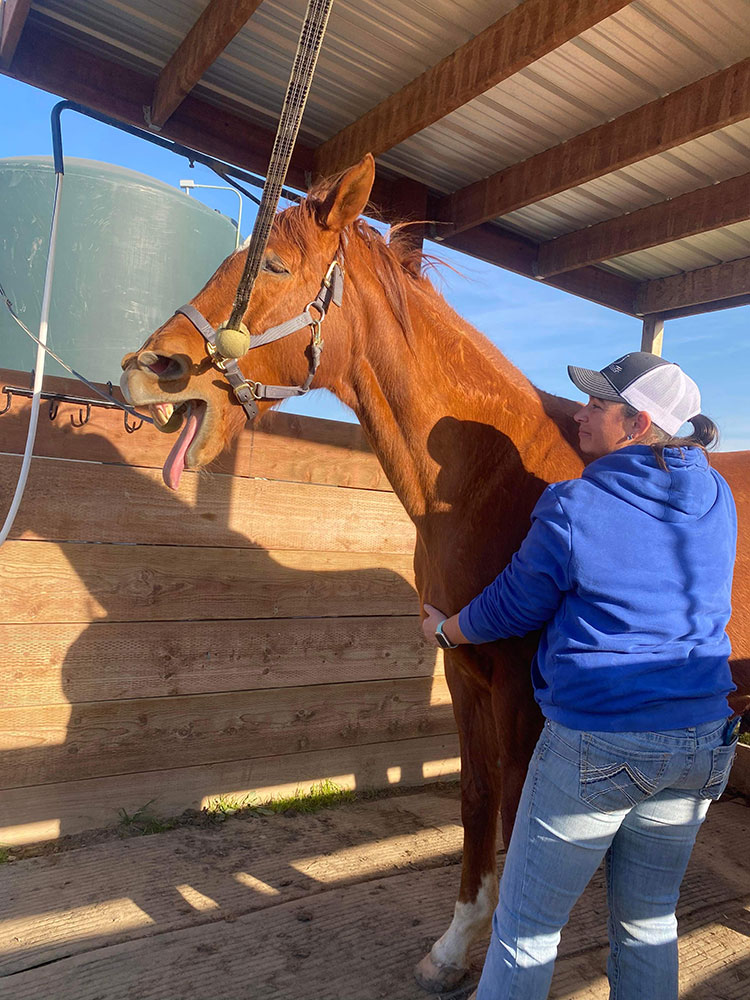
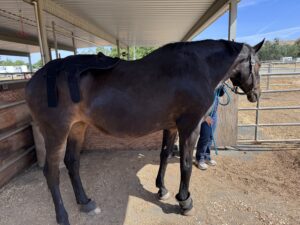
I received a call from a potential client back in June of this year asking for my assistance in helping to bring her mare some comfort. I was more than happy to see what I could do for this mare. I showed up to the barn one Saturday morning and the mare in pretty bad shape. She was crab walking, had been using the fence to hold herself up, was almost non-weight baring on her right hind and looking like a pretzel twisted to the left. All her weight was being held up on the left hind leg.
I asked several questions after doing a little research on sidewinders, which included asking if the mare had been tested for EPM and lymes disease. Her blood work had come back negative on both. So, the cause of Patina’s sidewinders will remain a mystery. 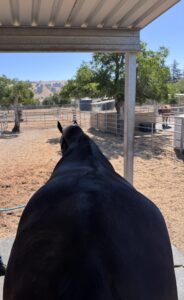
As soon as I got my hands on her, I could feel the tension in her neck, pecs, abdominal muscles on the right side and her left hindquarters were rock hard. I told the owner I would do my best to help but I hadn’t experienced this before. But I got started. My hands and red-light tools became this mare’s best friends for the next several months.
Prognosis—
While I worked on Patina, I chatted with her owner, and she informed me that 85% of sidewinders cases were euthanized in the first 48hrs of diagnosis. So, we were playing the waiting game with Patina. I saw her every other week for the first month. We were making some good progress and her owner, and I discussed keeping her on a regular every other week scheduled until the rain came (that was when her owner had decided to put Patina to sleep a long as we could keep her comfortable). I then didn’t see Patina for about 4 weeks bc I was on vacation.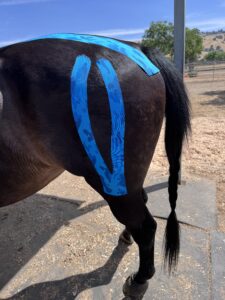
My Return—
I had Patina scheduled for the first Saturday of August. As soon as I pulled into the barn, Patina saw me coming and was very excited to see me, she even nickered at me. Her owner said she’d been having a rough time while I was gone but was happy I was back to help Patina with her discomfort. I was able to get her relaxed enough to not stand so crooked and bare more weight on the right hind.
The Plan—
During Patina’s sessions, I could get her muscles relaxed enough between the use of my hands and the red-light pad and torch. Patina would give me big sighs, yawns and almost fall asleep during her massages. We decided to increase her sessions to once a week because she was doing the best with that frequency. Patina’s owner would text me throughout the week letting me know how she was doing, and she was always the straightest for 2-3 days after a session and then she would start to get crooked again.
Along with massage sessions, Patina would receive chiropractic and acupuncture treatments that sometimes would help and sometimes make her more agitated. After each massage session, I would use k-tape to help stabilize the muscles and relieve tension over her glutes and hamstrings. That was Patina’s favorite thing.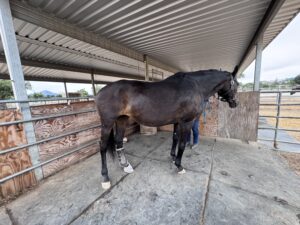
The Unimaginable—
One of the things that happens with these horses is that they struggle to bare weight on both hind legs, so that foot that holds up the most weight becomes compromised. Unfortunately, that is what happened with Patina. I saw her on a Saturday and by that following Monday, her body had quit her. Her left hind hoof was very bruised, and the wall was starting to separate. She was mostly non-weight baring on both hind legs. The mare also seemed to be sleep deprived, so she was no longer confident enough in her body to lay down and sleep. Her owner made the very difficult decision to let Patina go.
Many Thanks—
I feel very blessed and grateful to have learned from Patina and been giving the opportunity by her owner to be a small part of keeping Patina comfortable for a few months after her sidewinders diagnosis. Thank you, Patina, for the lessons you taught me and knowledge I gained while working on you.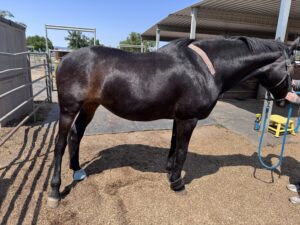
If you have a horse that you are struggling with, book a massage and see if I can help bring your athlete some comfort! SLBH Equine Bodywork is here to help!